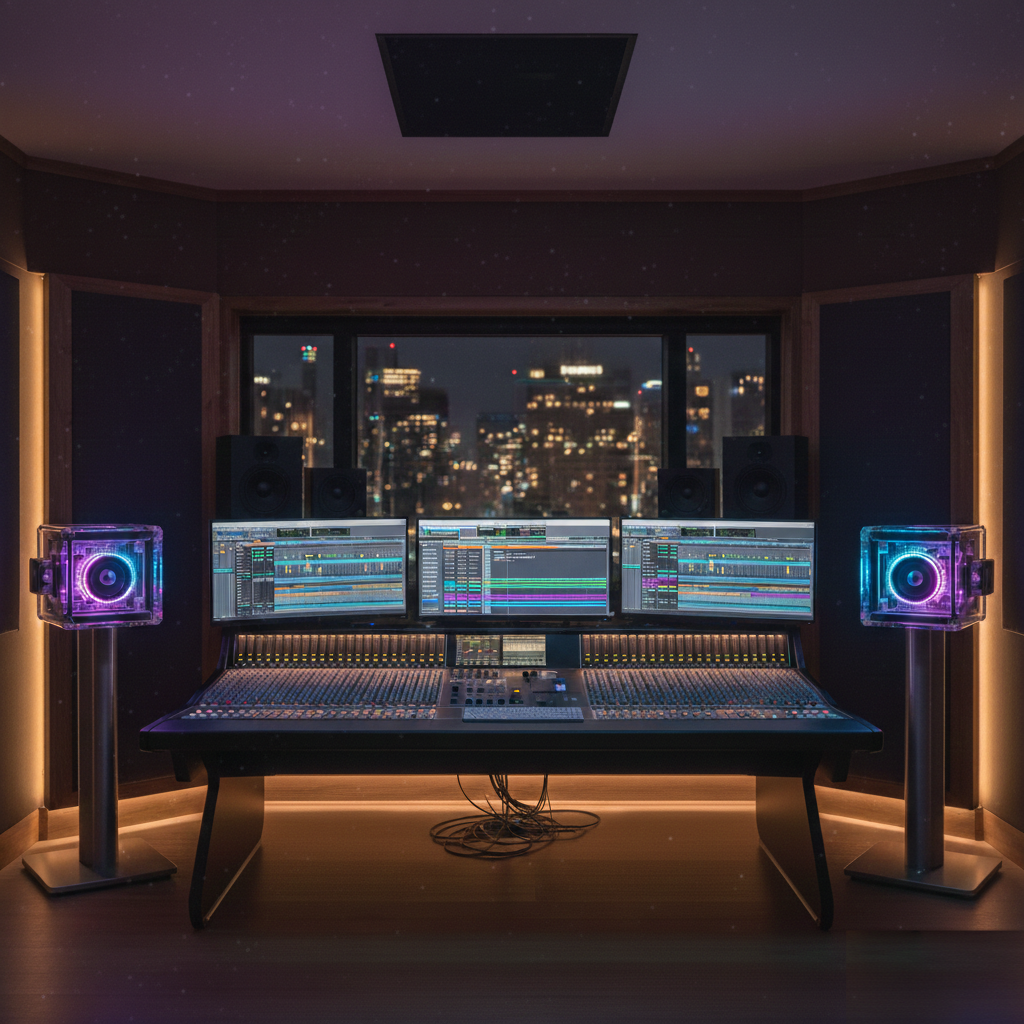
Introduction to Sound Design in Film Trailers
Modern trailer sound design is a high-stakes discipline where psychology meets technical precision to drive immediate audience action. While many assume success depends on sheer volume, the true art lies in a sophisticated balance of calculated silence and thunderous impact that must translate perfectly from IMAX theaters to smartphone speakers. In 2026, this field has evolved beyond mere narrative support into a specialized marketing tool designed to cut through the digital noise of scroll culture in under three minutes.
Introduction to Sound Design in Film Trailers
Sound design film trailers is an essential topic to understand. The thunderous BRAAAM that shakes theater seats. The whispered dialogue that draws audiences forward. The silence that makes hearts skip a beat. Modern sound design for film trailers has evolved into a sophisticated art form that can make or break a movie's opening weekend performance.
In 2026, trailer sound design operates at the intersection of psychology, technology, and pure cinematic magic. Every sonic element—from the initial hook to the final logo sting—serves a calculated purpose in the film marketing machine. Unlike feature film sound design, which supports narrative, and a half minutes while driving immediate action. The stakes couldn't be higher. With audiences consuming trailers across multiple platforms—from IMAX screens to smartphone speakers—sound designers must craft experiences that translate seamlessly across vastly different playback environments. Spatial audio technologies are reshaping how audiences experience promotional content, while streaming platforms demand content that cuts through the noise of endless scroll culture.
But here's what most people get wrong about trailer sound design: it's not just about being loud or dramatic. The most effective approach often contradicts everything traditional wisdom suggests about grabbing attention.
Conventional Wisdom vs. Reality in Sound Design
The traditional playbook for trailer sound design is crumbling. While conventional wisdom dictates that bigger, louder, and more aggressive cinematic sound effects guarantee audience engagement, the reality in 2026 tells a different story entirely.
For decades, the industry operated on predictable formulas: orchestral stingers at act breaks, rising tension through frequency buildup, and the infamous "BRAAAM" sound popularizing every major blockbuster trailer. However, emerging data from commercial filmmaking trends reveals that audiences are gravitating toward more nuanced approaches.
The shift is dramatic. Where traditional sound design relied heavily on volume and impact, successful 2026 trailers are embracing dynamic contrast and spatial awareness. Modern audiences, saturated with predictable audio cues, respond more favorably to unexpected sonic choices—whispered revelations over thunderous reveals, organic textures over synthesized impacts.
This evolution doesn't mean abandoning powerful moments entirely. Instead, it requires strategic restraint. Audio trends for 2026 emphasize authenticity over artifice, suggesting that the most memorable trailers now balance intimate moments with carefully deployed impact sounds.
Understanding these shifting paradigms becomes crucial as we examine the specific elements that comprise effective modern trailer sound design.
Core Elements of Sound Design for Trailers
Effective trailer sound design operates on three foundational layers that work in concert to create emotional impact. The dialogue layer serves as the narrative anchor, carefully selected and edited to reveal character motivations without spoiling plot points. Sound effects provide texture, reality, and from the subtle creak of a door to explosive action sequences that demand attention. The musical score ties everything together, establishing mood and pacing while guiding the audience's emotional journey. Rhythm and pacing dictate trailer effectiveness more than any other single factor. Modern trailers increasingly rely on strategic silence and negative space to create tension. A well-timed pause can generate more anxiety than the loudest crescendo, while rapid-fire audio cuts mirror contemporary attention spans and social media consumption patterns.
The technical foundation involves precise frequency management across the audio spectrum. Low-end frequencies below 80Hz create physical impact, while mid-range clarity ensures dialogue intelligibility across various playback systems. High frequencies add sparkle and detail, but require careful balancing to avoid listener fatigue during repeated viewings.
Dynamic range compression has become essential as trailers compete for attention across platforms with varying audio standards. The Commercial Filmmaking Trend Report indicates that audio consistency across platforms will be crucial for 2026 campaigns, requiring sound designers to master both theatrical impact and streaming optimization.
Innovations and Trends in Sound Design by 2026
The sound design landscape is evolving rapidly, driven by technological breakthroughs and changing audience expectations. Spatial audio technology represents the most significant shift, moving beyond traditional stereo mixing to create three-dimensional soundscapes that position audiences within the trailer's world. This immersive approach transforms how Hollywood film trailers connect with viewers, making every sound element feel tangible and immediate.
Binaural audio processing is becoming increasingly sophisticated, allowing designers to craft experiences that work seamlessly across various playback systems. What traditionally required expensive theater setups can now be experienced through standard headphones, democratizing premium audio experiences for streaming platforms and mobile viewing.
The integration of real-time audio rendering is revolutionizing trailer production workflows. Sound designers can now manipulate audio elements dynamically during editing sessions, creating more organic relationships between visual cuts and sonic textures. This technology enables rapid iteration and experimentation that wasn't practical with traditional linear workflows.
Procedural sound generation using artificial intelligence is emerging as a powerful tool for creating unique sonic signatures. Rather than relying solely on sample libraries, designers can generate custom textures that perfectly match specific narrative moments, creating truly distinctive trailer soundscapes that stand apart from conventional approaches.
These innovations are reshaping industry standards, setting the stage for more sophisticated and engaging trailer experiences that capture audience attention in an increasingly competitive media landscape.
Practical Sound Design Techniques for Filmmakers
Modern trailer sound design requires mastery of layering techniques that transform ordinary footage into compelling emotional experiences. The foundation begins with strategic frequency separation, where low-end elements occupy the 20-80Hz range for physical impact, while mid-range frequencies (200-2kHz) carry dialogue clarity and musical elements.
Dynamic range manipulation serves as the most powerful tool for maintaining audience attention. Start scenes at moderate levels, then build intensity through gradual volume increases and sudden drops that create breathing space before climactic moments. This technique prevents listener fatigue while maximizing emotional peaks.
The iconic BRAAM sound—those deep, horn-like drones popularized by Hans Zimmer—remains effective when used sparingly. Layer multiple pitched brass samples with heavy compression and reverb to create custom variations that avoid cliché while maintaining impact.
Rhythmic synchronization between sound effects and visual cuts creates subliminal momentum. Even subtle whooshes, clicks, or ambient textures aligned to edit points enhance pacing perception. However, over-synchronization can feel mechanical—strategic misalignment of one element against the rhythm often creates more organic tension.
These foundational techniques provide the building blocks for crafting memorable trailer experiences that translate across different viewing environments and audience preferences.
Example Scenarios: Applying Sound Design
Consider a science fiction thriller trailer where the protagonist discovers an alien artifact. The opening sequence begins with subtle ambient textures - distant wind and barely audible electronic hums that create unease without overwhelming dialogue. As the character approaches the mysterious object, trailer hits punctuate each visual reveal, building from soft metallic resonances to thunderous impacts that sync perfectly with the artifact's pulsing light.
The emotional arc demands careful sound layering. During intimate character moments, designers strip away complex frequencies, focusing on clear dialogue and subtle emotional underscore. However, when the trailer shifts to action sequences, the soundscape explodes with layered percussion, distorted vocals, and custom-designed whooshes that emphasize the alien technology's otherworldly nature.
Modern trailers increasingly rely on dynamic range manipulation to create impact. A horror film scenario might use complete silence for three seconds, followed by a bone-rattling bass drop that forces viewers to lean forward. This technique, combined with spatial audio positioning, creates an immersive experience that traditional stereo mixing cannot achieve.
Genre conventions also dictate specific approaches. Romance trailers typically feature warm, organic textures with minimal percussion, while action films demand aggressive, metallic sounds that emphasize power, and intensity. However, successful sound design requires understanding both creative possibilities and practical constraints that can impact the final product.
Limitations and Considerations in Sound Design
Despite the power of advanced sound design techniques, several practical constraints shape trailer production decisions. Budget limitations often determine the scope of custom sound creation, forcing designers to balance original compositions with library elements. A typical trailer budget allocates 15-20% to audio post-production, which must cover everything from initial sound design to final mix.
Technical constraints present another significant challenge. Delivery formats vary dramatically across platforms—from theater-quality surround sound to compressed smartphone audio. What sounds impressive in a professional mixing room may lose impact when compressed for social media distribution. Sound designers must consider the lowest common denominator while maintaining cinematic quality.
The overuse of cinematic hits and dramatic stingers creates a saturation problem in the marketplace. When every trailer employs similar impact sounds, audiences become desensitized to their emotional effect. This forces designers to seek increasingly novel approaches or risk their trailers blending into the background noise of competing content.
Time pressure compounds these challenges, with typical trailer turnarounds allowing only 2-3 weeks for complete audio production. However, these constraints often spark creative innovation, pushing designers to develop more efficient workflows and discover unexpected solutions that wouldn't emerge under ideal conditions.
Future of Sound Design: Opportunities and Challenges
The trailer sound design landscape stands at a technological crossroads, where traditional techniques meet revolutionary innovations. Spatial audio technology represents the most significant advancement, promising to transform how audiences experience movie marketing. However, this evolution brings both unprecedented creative possibilities and complex production challenges.
Artificial intelligence integration emerges as another game-changing force. AI-powered tools can now analyze emotional response patterns and generate adaptive soundscapes that respond to viewer behavior in real-time. Yet this technological leap raises questions about creative authenticity and the role of human artistry in sound design.
The classic trailer booms that defined previous generations may soon become relics as personalized audio experiences take precedence. Streaming platforms increasingly demand content that adapts to individual viewing environments, from smartphone speakers to premium home theater systems.
Budget constraints continue to intensify as studios expect more sophisticated audio production without proportional increases in post-production timelines. This pressure drives innovation in workflow automation while challenging sound designers to maintain artistic integrity under tighter deadlines.
Perhaps most significantly, the democratization of professional-grade audio tools creates both opportunity and oversaturation. Independent creators now access technology previously reserved for major studios, fundamentally reshaping competitive dynamics in trailer production.
Key Sound Design Film Trailers Takeaways
The evolution of sound design for film trailers represents one of cinema's most dynamic creative frontiers, where technological innovation meets artistic vision. As we've explored throughout this analysis, the landscape is being reshaped by spatial audio technologies, AI-assisted workflows, and increasingly sophisticated audience expectations.
Three fundamental shifts define the current trajectory: the integration of immersive audio formats that transform passive viewing into experiential engagement, the democratization of professional-grade tools enabling broader creative participation, and the strategic use of sonic branding that extends beyond individual trailers to comprehensive franchise experiences.
However, success in this evolving field requires balancing innovation with practical constraints. Budget limitations, technical compatibility issues, and the persistent challenge of creating impactful audio within compressed timeframes continue to shape creative decisions. The most effective approaches combine cutting-edge techniques with proven storytelling fundamentals.
Looking ahead, the convergence of artificial intelligence, spatial audio, and personalized content delivery promises to revolutionize how trailers connect with audiences. The future belongs to sound designers who can seamlessly blend technological capabilities with emotional storytelling, creating sonic experiences that don't just promote films—they become memorable entertainment moments in their own right.